Frequently Asked Questions
Why choose grazing?
For us, grazing isn’t just a service—it’s a way of life. Our goats and sheep provide a natural, sustainable way to manage vegetation, restore ecosystems, and improve soil health. Unlike other methods, they consume seeds and plants, helping to reduce regrowth without chemicals or heavy machinery. It’s the way our family has always done it—working with the land, not against it.
Meet the Team: Our Goats, Sheep & Shepherds
What animals do you use for grazing?
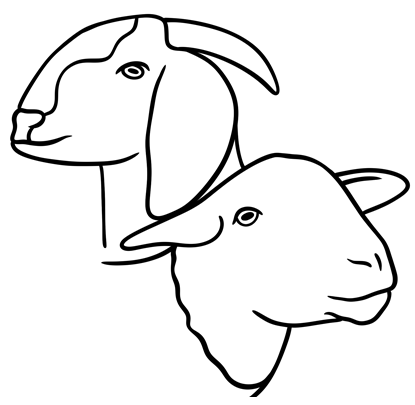
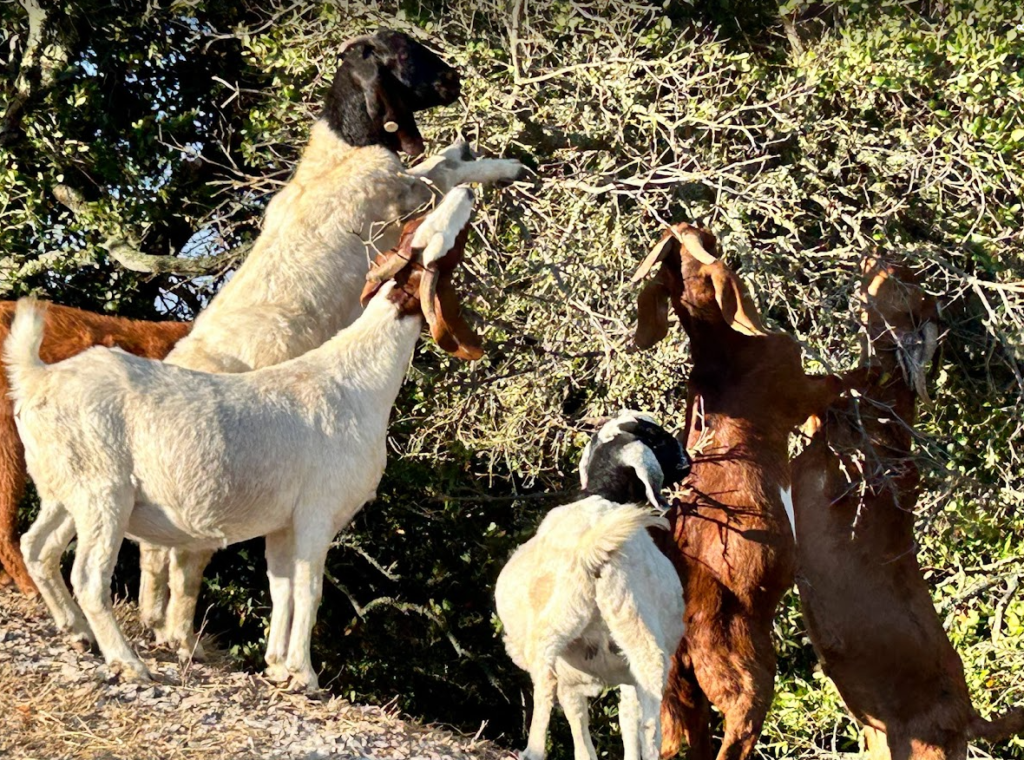
Our grazing teams include Boer goats and Dorper sheep—hardy breeds that work together like a well-trained crew. Goats browse from top-down, munching on shrubs, leaves, and flowers before turning to grass. Sheep graze bottom-up, focusing on grass and weeds. It’s a natural partnership, just like the one our family has with the land.
How do you know when it’s time to move the team?
They tell us! After years of working with our herds, we’ve learned to read their behavior. When they’ve done their job in one area, they let us know it’s time to move to the next. Basically, they get very vocal.
Why do we call them ‘teams’?
Because that’s exactly what they are. Our animals don’t work alone—they’re part of a team that includes our family. Every day, we transport them, set up fencing, and check on their well-being. It’s a family effort from start to finish.
Pricing & Logistics
How much does grazing cost?
Pricing depends on terrain, vegetation, site conditions, and several project-specific factors (access logistics, fence installation labor, water delivery, etc.). Installations are highly labor-intensive and can sometimes pose risks—rattlesnakes, poison oak, rocky terrain, and even extreme slope can all impact safety and cost.
MARCH THROUGH JULY:
- March through August base rate: $850 per acre
– Flat land, no poison oak, plenty of shade - Most projects: $900–$950 per acre
– Accounts for slope and rocky ground - Additional surcharges (as needed):
– Water surcharge: $50 per acre when we haul in and provide water on-site
– Predator protection: Custom fee if extra guardian dogs are required - Minimum project size: 2 contiguous acres
- Volume discounts: Available for larger properties (20+ acres) —let’s discuss a tailored rate!
We do NOT charge delivery or setup fees—because as a family-run business, we take pride in personally transporting and installing the team. This way, we can keep costs reasonable and pass the savings directly to you.
Are you licensed and insured?
Absolutely. SLO Goats & Sheep LLC carries a $2 million liability insurance policy that covers our goats, sheep, and livestock guardian dogs. We also maintain an active San Luis Obispo County business license, which allows us to operate throughout the county without needing individual city licenses. Our headquarters — Hacienda del Pastor — is a 20-acre ranch in Creston, California, perfectly situated in the heart of the communities we serve. Our goal is to deliver peace of mind alongside every grazing project.
Are you wondering if we provide full documentation for our projects?
We adhere to standard accounting practices, providing detailed contracts, invoices, and receipts for every job. This transparency not only builds trust but may also help reduce your insurance rates. At the conclusion of your project, we’ll email you a survey—your feedback is invaluable and helps us continually improve our service.
What size projects do you handle?
We welcome 2-acre projects, but our specialty—and where we deliver the most value—is in properties ranging from 6 to 10 acres, all the way up to 50 acres. These sizes allow our team to work efficiently, maintain healthy grazing rotations, and deliver measurable results. Larger properties also benefit from economies of scale, making them ideal for seasonal fire mitigation and long-term vegetation control. If your property is smaller or larger, we’re happy to evaluate it or refer you to a trusted partner.
How long does grazing take?
This is the number one question we get—and for good reason. The truth is, it depends. There are many variables that affect grazing time, including the type, density, and height of vegetation. That’s why we prefer to assess each property in person before providing an estimate.
That said, here’s a general idea:
- Summer (e.g., August): 1–2 days per acre with 100 animals, when vegetation is dry and sparse
- Spring (e.g., May): Up to 1 week per acre due to lush, green growth
Needless to say, May takes longer than August. Every project is different, but we’ll always give you a realistic estimate after seeing your land. Our priority is getting the job done thoroughly—not just quickly.
How Grazing Works
What do goats and sheep eat?
Our goats and sheep love tackling tough, invasive plants like ivy, mustard, nettles, and thistles—including California’s #1 invasive species, yellow starthistle!
What Won’t They Eat?
- Avoided plants: Foxtail, Telegraph weed, and Tarweed—they simply don’t find them appetizing.
- Least favorite: Poison oak. They’ll only eat it as a last resort or when the leaves are young. However, their movement naturally tramples and weakens unwanted vegetation, making removal easier—even for the plants the team avoids.
How does targeted grazing work?
On every project we provide:
✅ Experienced goats, sheep, and livestock guardian dogs
✅ Solar-powered electric fencing
✅ Daily check-ins to refill water, feed dogs, and monitor the team’s mental and physical well-being
The family keeps a close eye on every project to ensure the animals are safe and productive.
Why use electric fencing?
It keeps the team safe, contained, and protected from predators. And don’t worry—our team knows to respect the fence!
Will I see baby animals?
Maybe! While 80% of our births occur between January and May, our does and ewes give birth year-round. You’re especially likely to see newborn kids and lambs during those early months—bouncing around the field and learning the ropes.
It’s important that our babies are born in the same pastures where they’ll eventually graze. They begin nibbling grass within a day of birth, and early exposure to the grazing environment supports long-term health and adaptability. Although we sometimes bring first-time mothers to Windy Ridge Ranch or Hacienda del Pastor for additional support, most births happen right on-site in the fields they’ll call home.
Our family has watched generations of animals grow up alongside us—and it never gets old!
Getting Started
How do I get started?
📞If you’re ready to move forward, please call or text Cindy at 480‑309‑3933 to schedule your site visit and receive a quote. To secure your reservation on our busy calendar, we kindly ask that you have a deposit ready when we visit—we accept cash, checks, and digital payments. This simple step ensures your vital project is reserved while we schedule the remaining dates around it. We’re eager to work with you and ensure your project receives the dedicated attention it deserves.
• For a 2 to 4‑acre project, a one‑acre deposit is required.
• For a 5 to 9‑acre project, a two‑acre deposit is needed.
• For a 10‑acre project, a three‑acre deposit is required—and the deposit increases accordingly for larger projects.
Can I cancel?
We understand that plans change, but cancellations impact scheduling.
- 21+ days before start date: Full refund
- 14 days before start date: 50% refund
- If we cancel (which has never happened!): Full refund
How do I prepare my property?
🚜 Remove any trash, sharp objects, or hazards before our team arrives. They’ll try to eat almost anything!
Can I feed the animals?
🚫 No, please don’t. As tempting as it is, feeding them disrupts their grazing patterns and could be harmful to their health.
Are there poisonous plants?
Yes! Some plants can be dangerous to our animals. If you have any of these, let us know before grazing begins:
🌿 Toxic to goats: Avocado, azalea, lantana, lilacs, lupine, milkweed, oleander, rhododendron. It is normally not an issue but sometimes we need to fence around a plant, like an avocado tree.
🍃 Toxic to sheep: Azaleas, acorns, buttercups, daffodils, holly, boxwood, bracken fern, elderberry.
More About SLO Goats & Sheep
What other services do you offer?
- 🐐 We sell live Boer goats and Dorper sheep of all ages.
- 🌾 Our partner business, SLO Ranch Services, offers:
- ✅ Brush clearing
- ✅ Poison oak reduction/removal
- ✅ Tree trimming
- ✅ Weed whacking
How do you give back to the community?
Giving back is part of who we are. We offer:
🌱 Educational presentations for schools and community groups
🐑 Hands-on learning experiences for students and families
🌿 Fresh compost giveaways from our well-fed, hardworking herd
Got an idea for how we can support your community? Let us know!